
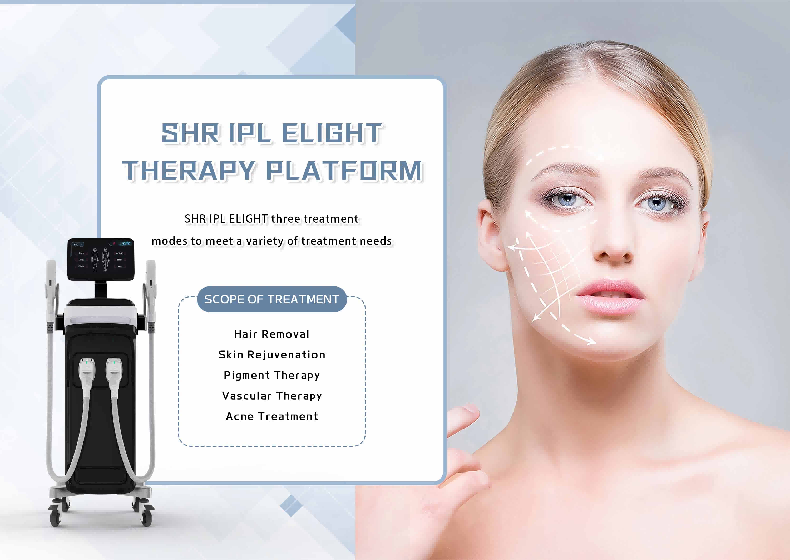
“The IPL hair removal device I bought has been in use for almost a year. The skin on the calf has indeed become much smoother. I used to scrape it once a week, but now it’s not a problem if I don’t treat it for a month. But I’ve been busy with work lately, and I haven’t been using it for two consecutive months. Yesterday, while taking a shower, I noticed that some places seemed to be starting to produce fine hairs. ”An IPL user said.
This makes me feel uneasy. Did all my previous persistence go to waste? Will these hairs grow longer and eventually return to their original state?Here, we will know the truth.
1. How Much Do You Know About Hair Follicles
You may not know that the hair on our bodies does not grow all at once. Each hair follicle has its own schedule, like a small factory, with working and resting times.
1.1 Scientific Principles: The Growth Pattern of Hair Follicles
Human hair cycles according to its growth cycle. Each hair follicle goes through three stages: growth phase, regression phase, and resting phase.
The growth period usually lasts for 2-6 years, during which the hair follicles are active and produce visible hair. The degenerative period lasts about 2-3 weeks, and the hair follicles begin to shrink. The resting period lasts for several months, during which hair stops growing and eventually falls off.
At any given time, only about 20% of hair follicles are in the growth phase. This means that in a single treatment, IPL can only act on these active hair follicles.
2. How Does IPL Deal With These Hair Follicles
The intense pulsed light emitted by the IPL hair removal device is essentially a “precise strike”. It specifically targets those hair follicles that are working – that is, those in the growth phase.
2.1 The Process of Converting Light Energy into Heat Energy
When you shine the instrument on your skin, the melanin in the hair follicles will desperately absorb this light, just like wearing black clothes in summer is particularly heat absorbing. Light energy is absorbed and converted into heat energy, causing an instant increase in temperature.
This heat is just right to burn hair follicles, but it won’t harm the surrounding skin. The burned hair follicles will enter a dormant state, and some may even remain dormant forever.
2.2 Why Is It Necessary to Do the Treatment Repeatedly
Because hair follicles do not work synchronously, the 20% that you knocked out today may be working, and another batch of hair follicles may start working next week. So the manufacturer requires you to use it 8-12 times, every 2-4 weeks, in order to treat all hair follicles once.
3. What Actually Happens After Stopping IPL: Truth and Misunderstandings
3.1 Truth: Partial Hair Growth is A Normal Phenomenon
The goal of IPL treatment is permanent hair reduction, not permanent hair elimination. Even professional medical laser hair removal requires periodic maintenance.
After disabling IPL, you may observe changes including:
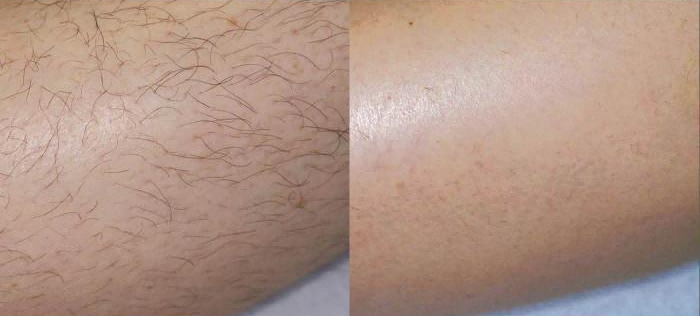
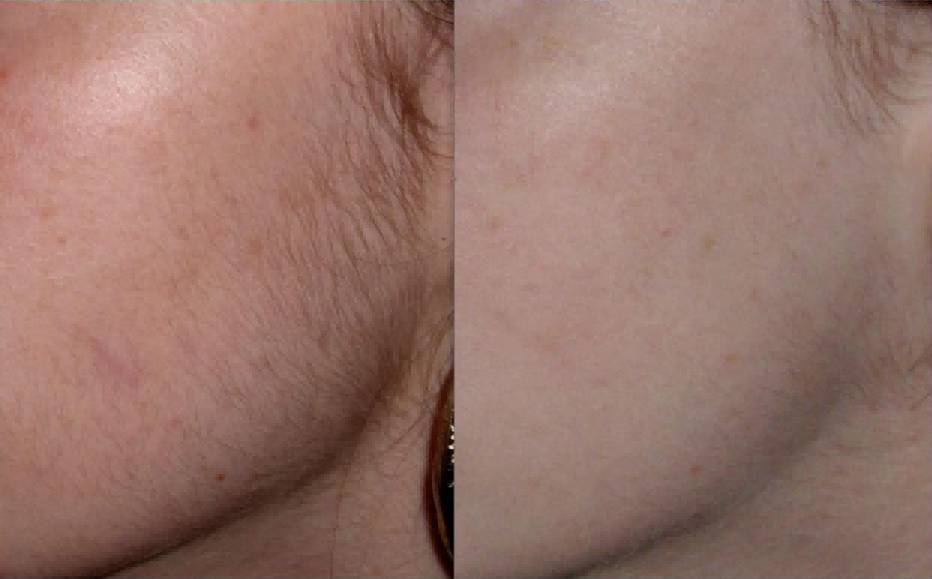
- The hair density has significantly decreased – previously it was a dense “lawn”, now it is only scattered “grass”
- Changes in hair texture – coarse black final hair turns into fine soft fuzz
- Slow growth rate – from needing treatment in a few days to weeks or even months
- Hair color becomes lighter – from dark black to light brown or gold
3.2 Misconception: Regrowth Equals Treatment Failure
This is the most common misunderstanding. In fact, slight regrowth precisely proves the effectiveness of the treatment – only those hair follicles that are in a dormant phase and have not been treated, or a few hair follicles with less damage, will reactivate. The true failure scenario is when the hair fully recovers to its pre-treatment state and density within 2-4 weeks, which is extremely rare under standardized treatment.
4. What Factors Can Affect Hair Regrowth
4.1 Your Physical Condition
If you are a type with particularly strong hair, black and thick hair, the possibility of regrowth is greater and the speed may be faster. This is related to hormone levels and genetics. Hormonal fluctuations before and after a woman’s menstrual cycle, as well as during pregnancy, can also affect hair growth.
4.2 Have You Persisted in Completing the Treatment Course
This is too important. My best friend bought the same device, but after using it three times, she found it troublesome and left it unused. As a result, after a month, her hair almost returned to its full length. And I have persisted in using it ten times, and now it has been three months since I stopped using it, but the effect still remains very good.
Why? Because only a portion of the hair follicles were treated with the three treatments, and most of the follicles were still on rotation, they were not treated at all.
4.3 Which Body Part Do You Use it On
The duration of effect maintenance varies among different body parts. The armpits and bikini lines, once fully treated, last the longest, almost not very long. The calves and arms are relatively easy to regrow. Lip hair, a small facial hair, may require more frequent consolidation.
4.4 Selection and usage of instruments
Instruments with sufficient energy are definitely more effective. When using, be sure to ensure that the instrument head is fully attached to the skin, and there should be a small overlap during each polishing to ensure no omissions. These details will all affect the final effect.
5. How to Make Smoothness Last Longer
Since we know what will happen after discontinuation, we can take targeted measures to maintain the effect for a longer period of time.
The first three months are the golden period, don’t be lazy. Strictly follow the frequency in the manual, usually once every two weeks at the beginning, and then it can be extended to once a month. Every part should be covered, it’s better to hit a few more times than to miss anything.
I have a little trick: make a mark on the calendar after each treatment, so you won’t forget the next treatment time.
5.1 Learn to Observe and Enter the Maintenance Period
When you notice that your hair has grown very slowly and very thin, you can switch from “intensive treatment” to “maintenance period”.
What is the maintenance period? It means there is no need for regular treatment anymore, but instead it should be changed to “see and hit”. My current practice is to check every time you take a shower, and if there are several obvious hairs growing in a certain area, you should remove them specifically.
This frequency may be once a month or once every three months, depending on individual circumstances.
5.2 Consider the Season
I found that hair growth is more active in spring and summer, while it is relatively slow in autumn and winter. So I will do a full body consolidation treatment in advance every spring, so that I can maintain a good state throughout the summer.
FAQ
Q: Is IPL lying about permanent hair removal?
This is a matter of understanding. The medical term ‘permanent hair loss’ refers to a significant long-term reduction in hair quantity after a complete treatment course, which may require occasional maintenance. And ‘permanent hair removal’ theoretically means no longer growing, which usually requires medical grade lasers to achieve.
Q: Why do I sometimes feel like I’m growing more after I stop using it?
This is an interesting phenomenon called ‘synchronization’. Because IPL causes many hair follicles to enter a dormant phase at the same time, when they ‘wake up’, they also begin to grow around the same time, creating the illusion of increased hair for a period of time. This is actually a good thing because you can deal with them all at once.
Q: If discontinued for a long time, does it require treatment from scratch to restart?
Not necessarily. If the complete course of treatment has been completed before, usually only a few treatments are needed to restore the effect. It depends on the current hair condition.