
Understanding Picosecond Laser Technology and Its Recovery Benefits
What Makes Picosecond Laser Technology Unique in Aesthetic Treatments
Picosecond laser technology marks a major step forward in aesthetic dermatology. It features very quick pulse delivery. Traditional lasers mainly use heat to tackle skin issues. However, the picosecond laser releases energy in very short bursts. These bursts are measured in trillionths of a second. Pico means ‘one trillionth’. Picture flicking a light switch off and on one trillion times in just a second. That’s what a picosecond really is. It describes the light energy entering the skin in that time.
This super short pulse length produces a photomechanical effect. It does not create a photothermal one. As the light pulses flick off and on one trillion times in a second, it’s like ocean waves rising and falling. When those waves hit the shore, they shape the sand. They can even break apart dead coral into tiny sand bits. Something similar occurs in the skin. The outcome is accurate targeting with little thermal harm to nearby tissues.
This mechanical accuracy greatly aids quicker healing and less pain. It makes picosecond lasers perfect for handling pigmentation, fine lines, scarring, and tattoos. The picosecond laser treatment excels at removing skin pigmentation. The laser focuses on pigments in the skin. Moreover, the picosecond laser functions similarly for fine lines and wrinkles as for scarring. It triggers the body’s natural healing process. This stimulates collagen production. That helps repair and reshape the skin.
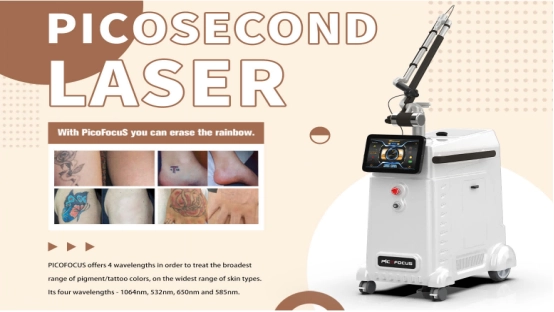
How Picosecond Laser Reduces Downtime Compared to Traditional Lasers
A key advantage of picosecond laser treatments is the cut in post-procedure downtime. Traditional lasers often depend on heat, or the photothermal effect. This can lead to strong inflammation, redness, and extended recovery times. By contrast, picosecond laser technology employs light pulses. Traditional laser treatments usually rely on heat.
The lower heat from picosecond lasers means reduced injury to surrounding tissues. The photomechanical pressure waves quickly break pigment or scar tissue into tiny pieces. They cause minimal disturbance to healthy skin. These pressure waves focus on skin areas, like tattoo pigments or dark spots and scars. They ‘squeeze’ those cells and make them shatter into small particles. Then, the body’s immune system clears these particles. This leads to less redness, swelling, or peeling after treatment.
Additionally, this technology boosts fast cell renewal and collagen growth. It does so without harming the outer skin layer. The picosecond laser delivers quick laser energy in picoseconds. It shatters pigmentation and encourages collagen production. The slightly invasive approach lets most patients get back to daily routines much earlier than with older laser methods.
Debunking the Downtime Myth of Picosecond Laser Treatments
Common Misconceptions About Picosecond Laser Downtime
Even with its perks, myths persist about recovery from picosecond laser treatments. Many people think these procedures mean no downtime at all. Yet, this isn’t always true. Some marketing creates false hopes of immediate recovery.
Recovery times vary widely. They depend on factors like skin type, treatment zone, and the problem’s seriousness. For example, fixing deep acne scars might cause more visible reactions after treatment than treating light pigmentation.
Downtime is much shorter than with traditional lasers. Still, it happens to some extent. This is especially true for stronger sessions or larger areas.
The Realistic Recovery Timeline After Picosecond Laser Procedures
In typical cases, patients face only slight side effects. These include redness or small crusts, mainly in the first 24–48 hours after treatment. Acne scarring or injury scars can get extra pulses. This might lead to some skin redness. Most people can go back to work or social events in one to two days.
Based on treatment strength, mild redness or sensitivity might last a bit longer. But it usually fades on its own. For those having several sessions for pigment removal or scarring, results appear after a few visits. Improvements keep building as healing advances.
Importantly, good aftercare habits can speed up recovery and ease comfort. From Nubway, our picosecond laser machine offers fantastic services in beauty treatments like these.
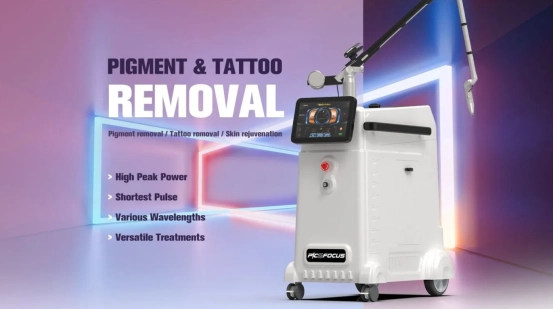
Clinical Advantages of Picosecond Laser for Faster Skin Healing
Biological Mechanisms That Support Quicker Recovery with Picosecond Laser
The biological processes behind picosecond technology directly aid faster healing. These lasers skip intense heat. So, they prevent widespread damage to outer tissues.
Instead, their photomechanical action sends focused energy. It breaks down pigmentation and promotes skin remodeling through collagen production. It does this without removing the epidermis. The broken pigments get cleared naturally by the body. This results in clearer skin. It also reduces aging signs and betters texture.
Plus, tissue studies show that picosecond lasers boost dermal collagen fiber density. They lower inflammation signs. This backs their safe and effective nature. A 3-dimensional review showed an average 24.3% drop in scar volume. These gains lasted 3 months after treatment. Skin tissue analysis also revealed longer and denser elastic fibers and dermal collagen.
Comparing Healing Responses Between Picosecond Laser and Nanosecond Lasers
Nanosecond Q-switched lasers have long been used for these goals. But their longer pulses build more heat. Picosecond lasers, however, provide more precise energy with far less side damage.
This better approach leads to faster fading of effects like redness or swelling. Patient feedback also prefers picosecond treatments. The picosecond laser side effects of pain scored just 2.83 out of 10 on average. That’s low on the pain scale. The reduced discomfort allows more regular sessions if required. It keeps recovery periods brief.
Tailoring Picosecond Laser Treatments for Optimized Recovery Outcomes
The Role of Individual Skin Characteristics in Recovery Speed from Picosecond Laser
Personal traits greatly affect recovery pace from picosecond laser procedures. Fitzpatrick skin types I–III often heal a tad quicker than types IV–VI. This stems from melanin levels and inflammation reactions.
Thicker or oilier skin might handle higher energy but could see longer redness. On the other hand, thinner or drier skin needs milder settings to skip irritation.
People with issues like acne or rosacea may heal slower. Their skin barrier is already sensitive. A full consultation sets proper expectations based on each person’s skin biology. From Nubway, we customize these beauty treatments for optimal results.
Customizing Energy Settings and Protocols in Picosecond Laser Sessions
Personalization is vital for best results and less downtime. Expert providers tweak energy levels, spot sizes, and pulse rates. They match patient aims and limits.
Fractional settings often cut overall tissue strain. Yet, they still deliver good effects. Picosecond laser treatments for fine lines, wrinkles, pigmentation, scarring, and tattoo removal gain from these flexible options.
Adjusting energy ensures gentle care for sensitive spots. It keeps effectiveness. This balance supports briefer recovery without losing benefits.
Enhancing Post-Treatment Care After Picosecond Laser for Speedier Recovery
Best Practices for Post-Picosecond Laser Skincare Routines to Minimize Downtime
Aftercare is crucial for cutting downtime and improving outcomes. A soft skincare plan should use gentle, sulfate-free cleansers. Add moisturizers that fix the skin barrier to aid healing.
Apply broad-spectrum sunscreen daily. It’s key to block UV rays that could cause dark spots in this sensitive time. Also, skip strong ingredients like retinoids or scrubbing acids until the skin fully regrows.
These steps avoid extra irritation. They ensure even recovery for all skin types. Our picosecond laser machine from Nubway provides fantastic services to support such routines.
Professional Guidance on Managing Side Effects After Picosecond Laser Treatment
Some short-term effects like redness or dryness are normal. But they can be handled well with right help. Doctors often suggest calming topicals like aloe vera gels or ceramide creams.
Cold packs can help right after the session. They ease swelling and boost comfort. Check-in visits let providers track healing and tweak plans as needed.
Sticking to expert aftercare advice helps patients heal faster. They get the best cosmetic gains from picosecond laser treatments.
FAQ
Q: Does picosecond laser treatment really have no downtime?
Picosecond laser treatments significantly reduce downtime compared to traditional lasers, but they are not completely downtime-free. Mild redness, swelling, or sensitivity may occur for 24–48 hours, depending on treatment intensity, skin type, and treatment area.
Q: Why does picosecond laser technology allow faster recovery than traditional lasers?
Picosecond laser technology works through a photomechanical effect rather than heat. Its ultra-short pulses break pigment and scar tissue with minimal thermal damage, allowing surrounding skin to heal faster and reducing inflammation, pain, and recovery time.
Q: Is picosecond laser safe for different skin types and conditions?
Yes, picosecond laser treatments are suitable for a wide range of skin types and concerns, including pigmentation, acne scars, fine lines, and tattoos. However, recovery speed and results depend on individual skin characteristics and properly customized treatment parameters.