
Do you spend half an hour every morning and evening on skin care, with the same steps from cleansing, toning, essence, lotion, face cream to eye cream, neck cream, and sleep facial mask? If so, you may be experiencing a silent skin crisis.
1. What is Excessive Skincare? Diagnostic Criteria for Dermatologists
1.1 The Skincare “Pyramid” Has Turned into A Skincare “Skyscraper”
The skincare formula for dermatologists is extremely simple: cleansing+moisturizing+sun protection. And many people’s skincare process takes more than 10 steps.
From a medical perspective, the skin is not a canvas that needs to be repeatedly applied, but an organ that operates with precision. The main function of the stratum corneum is to act as a barrier – preventing external stimuli from entering while locking in moisture and nutrients. Every application, patting, and massage is a physical interference with this barrier.
Critical point: When the daily skincare steps exceed 5 steps, the skin’s absorption capacity does not increase linearly, but instead bears additional burden due to improper ingredient compatibility and frequent physical contact.
1.2 Excessive Frequency: Giving the Skin A “Vacation” is the True Luxury
Applying facial mask every day is one of the most popular skin care misconceptions in the past five years. Dermatologists refer to it as excessive hydration. When keratinocytes are soaked in water for a long time, just like how fingers become wrinkled and the structure of the stratum corneum becomes loose, greatly reducing their defense ability.
Correct use frequency of facial mask: 2-3 times a week, no more than 15 minutes each time. This is not a manufacturer’s excuse to save you money, but a basic knowledge of skin physiology.
1.3 Excessive Ingredients: Effect Superposition ≠ Results Superposition
“Vitamin C by day, Retinol by night” has become extremely popular on social media, but few bloggers have told you that high concentrations of vitamin C are strongly acidic, with pH values as low as 2.5-3.5. Retinoic acid components are pH sensitive and have their own exfoliating properties. The combination of the two is not 1+1>2, but “stimulus x stimulus=inflammation”.
Not to mention that many consumers use two or more exfoliating products simultaneously, or use multiple highly active ingredients simultaneously. Skin is not a chemical laboratory, it cannot handle this level of ingredient bombardment.
2. Barrier Damage: When You Destroy the Barrier of the Skin
2.1 What is the Skin Barrier?
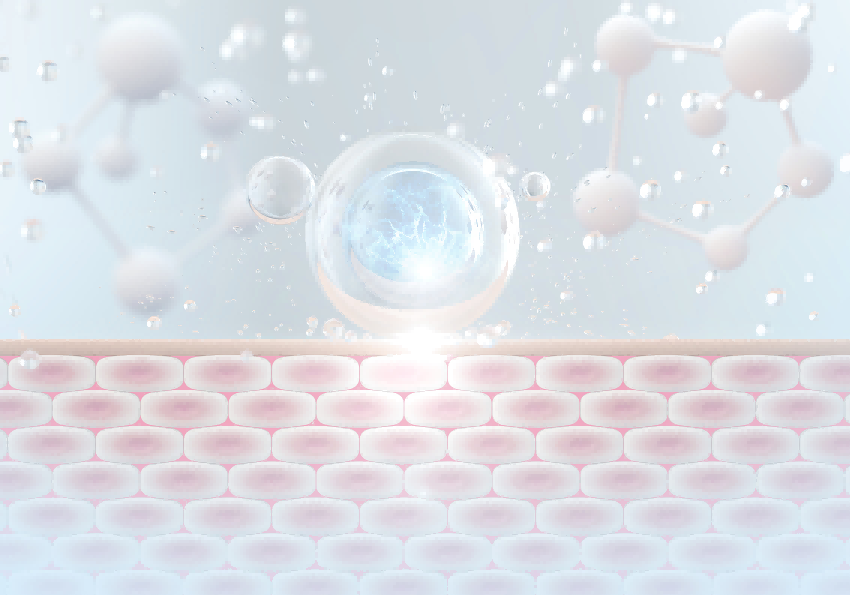
Dermatologists often compare the skin barrier to a “brick and mortar structure”.
Keratinocytes are bricks, intercellular lipids are cement, and the sebum membrane is the outermost waterproof coating. A healthy barrier can prevent water evaporation (water retention) and also prevent external stimuli from entering (defense).
How did excessive skincare break down this barrier?
Frequent cleaning: wash away sebum film, expose stratum corneum
Excessive exfoliation: thin or even wear through barrier
Frequent application: keep the skin in a water soaked state for a long time, causing the structure to loosen and collapse
2.2 Seven Signals of Barrier Damage
External oil and internal dryness: The skin is oily but tight, the T-zone is oily, and the cheeks are dry. This means the ability to lock in water has decreased.
Skin care products sting the skin: The products begin stinging the skin. This means tiny cracks appear in the barrier.
Redness does not subside: Both cheeks continue to turn red, and emotions become more intense or worsen when exposed to heat. This means inflammatory factors are activated
Skin peeling and flaking: It’s not flaky shedding, but small flakes of skin. This means metabolic disorders appears.
Recurring closed comedones: The cleaner and more acidic the brush, the more closed the mouth. This means the skin is undergoing compensatory keratinization.
Decreased tolerance: Redness in seasonal changes, hair dryers, and air-conditioned rooms. This means the loss of skin cushioning ability.
Pigmentation: After inflammation, pigmentation is more pronounced and persistent than in normal individuals. This means melanocytes are overstimulated
2.3 Inflammatory Aging: A More Covert Killer than Photoaging
Dermatologists have been increasingly concerned about inflammatory aging in recent years.
When the barrier is damaged, external stimuli drive straight in, and the skin enters a low-grade chronic inflammatory state. This inflammation is not visible to the naked eye like acne, but rather mediated by cytokines that quietly destroy collagen and elastin fibers. People who excessively take care of their skin for a long time tend to develop fine lines and sagging earlier than those who take care of their skin normally. It’s not that the skincare products are useless, but that you have personally dismantled the skin’s defense system.
3. How to fix it? Dermatologists’ Subtractive Skincare
3.1 Step 1: Stop All Functional Products
The golden rule of barrier repair is that any efficacy is useless until the skin stays calm.
Vitamin C, retinol, fruit acid, salicylic acid, high concentration niacinamide, scrub, facial cleanser… Please pause all. This is not a permanent ban, but a 4-8 week calming period for the skin. Healthy skin can carry effective ingredients, and skin in the rotten face stage only needs one thing: rest.
3.2 Step 2: Minimalist Skincare
During the day:
Clean with water or gentle cleanser (limited to areas with severe oil loss)
Moisturizing cream/cream with simple ingredients
Broad spectrum sun protection (priority given to hard sun protection)
at night:
Gentle Cleansing (Makeup Removal+Cleansing in One, Avoiding Secondary Cleansing)
Moisturizing milk/cream
Local thick application of medical repair cream
Product selection criteria:
Cleansing: Amino acid surfactant, pH 5.5-6.5
Moisturizing cream: no more than 15 ingredients, no essence, no alcohol, no complex plant extracts
Sunscreen: Physical sunscreen products (zinc oxide, titanium dioxide) are preferred, with lower risk of sensitization
3.3 Step 3: Give the Skin Enough Time to Repair
It takes about 28 days for keratinocytes to travel from the basal layer to the stratum corneum. It takes 3-6 months for the damaged barrier function to fully recover.
This is not a quick fix process. The products that claim to have overnight repair and 7-day face changing are either hormones or exaggerated marketing. True repair relies on the skin’s own regenerative ability, and all we can do is not disturb it.
FAQ
Q: Can I go to a beauty salon for care during barrier repair?
Absolutely not recommended.
The skin with damaged barriers is in a state of low defense. The core of beauty salon care – massage, hot spray, introduction, cleaning – may be a pleasure for healthy skin, but it is a secondary trauma for damaged skin.