
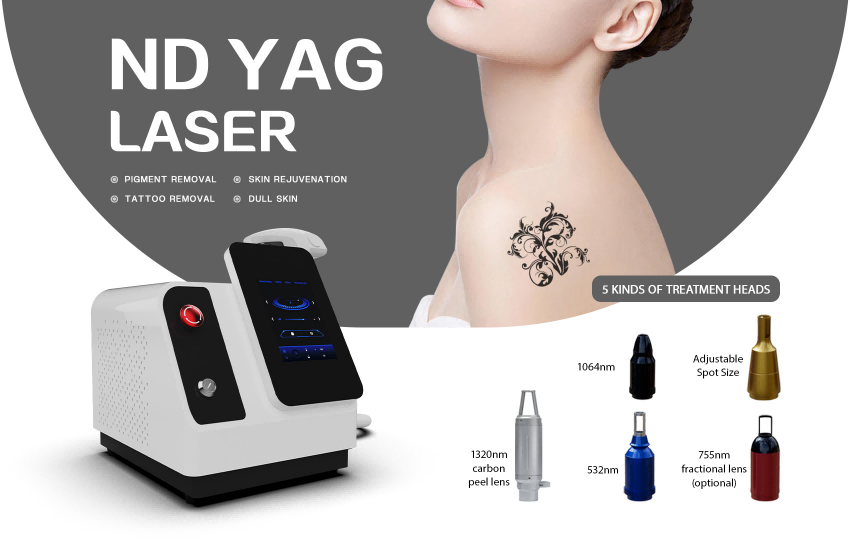
The main reasons why many people choose to remove their eyebrow tattoo are the failure of eyebrow tattooing, outdated eyebrow shape, and red or blue color. Among numerous eyebrow cleaning techniques, ND YAG laser (neodymium YAG laser) is known as the gold standard for eyebrow cleaning. However, when the laser is aimed at the eyebrow area, the most frightening question for consumers arises: Will the laser kill my hair follicles as well? Will I not be able to grow eyebrows in the future?
As a practitioner who has been deeply involved in the medical beauty industry for many years, I can clearly tell you that under the operation of professional doctors, ND YAG laser eyebrow cleaning will not damage hair follicle function, and eyebrows will grow normally after recovery. But behind this lies a key logic: how does laser distinguish between pigments and hair? This article will thoroughly explain the working principle of ND YAG laser, the physiological structure of hair follicles, and postoperative recovery from three dimensions.
1.The Core Principle Of ND YAG Laser Tattoo Removal
1.1 What is Q-Switch technology?
ND YAG laser can release high energy in a very short time (nanosecond level, one billionth of a second). This high-speed pulse means that the laser stays on the skin for a very short time, so short that even heat cannot diffuse to surrounding tissues. It’s like a precise sniper, aiming only at the target without harming the hostages.
1.2 Target Tissue: Eyebrow Pigment Vs. Hair Follicle Melanin
The reason why ND YAG laser can remove eyebrow tattoo is that the pigments used for eyebrow tattooing (whether coffee, black, or blue) have extremely high absorption rates for specific wavelengths of laser (usually 1064nm or 532nm).
When the laser is irradiated, the energy is instantly absorbed by the eyebrow pigment particles. The pigment particles are heated, expanded, and exploded into small pigment particles, which are then slowly metabolized and excreted by the body’s phagocytic cells.
The key is that although the hair follicles of eyebrows also contain melanin (which determines the color of the eyebrows), the concentration of melanin in the hair follicles is much lower than that of eyebrow pigments, and its distribution is more dispersed. The parameter setting of laser energy is for high concentration pigments, and this energy level is not sufficient to cause devastating damage to normal melanocytes in hair follicles.
2.Why Can ND YAG Laser Accurately Avoid Hair Follicles?
2.1 Wavelength Selectivity: Deep Penetration, Low Absorption
The two most commonly used wavelengths for ND YAG laser are 1064nm and 532nm.
1064nm wavelength: penetrates very deeply, reaching the deep dermis layer of the skin. But its absorption rate of melanin in the epidermis (i.e. melanin in the hair shaft and hair follicle opening that we see) is actually relatively low.
532nm wavelength: mainly used for processing red and brown tattoos or pigmentation, acting on the epidermis.
When washing eyebrows, doctors will choose the corresponding wavelength based on the color of the eyebrows (black/red/blue). The energy of the laser is mainly intercepted by the foreign pigment. Although it passes through the hair follicle on the penetration path, due to the significant energy consumption at the pigment site and the extremely short pulse time (nanosecond level), the heat reaching the hair follicle hair growth area is negligible, far from reaching the temperature threshold for scalding the hair follicle.
2.2 Comfort and Safety: No Damage To Surrounding Tissues
Hair follicles are structures enclosed within the skin tissue. Since laser does not damage the surrounding epidermis and dermis, it naturally does not selectively damage hair follicles. The slight redness and swelling after eyebrow washing is usually caused by temporary inflammatory reactions caused by laser shock waves or slight scabbing of the epidermis due to pigment explosion, rather than hair follicle necrosis.
2.3 Clinical Evidence: Hair Still Exists
During the process of eyebrow tattoo removal, the hair shaft of the eyebrows will instantly vaporize or even burn and fall off due to laser irradiation. This is caused by the laser energy acting on the melanin on the surface of the hair shaft, but the root of the hair follicle is located deep in the skin. As long as it is not repeatedly and over burned at the same point with high energy, the stem cell pool of the hair follicle can be preserved. Usually, 1-2 weeks after the end of treatment, as the skin barrier is repaired, new eyebrows will regrow from the hair follicles.
3.Under What Circumstances Can Eyebrow Tattoo Removal Really Cause Eyebrows To Not Grow Out?
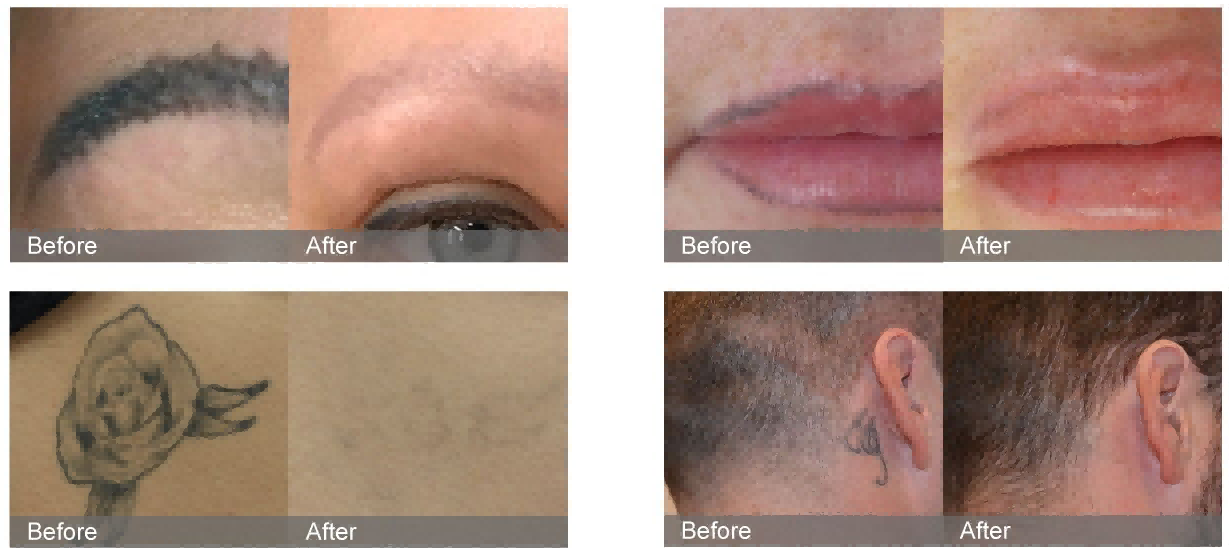
Although ND YAG laser itself is safe, there is indeed a risk of affecting eyebrow growth under certain non-standard operations. Consumers need to be alert to the following three situations when choosing institutions and operators:
3.1 Inexperienced Operator: Incorrect Parameter Settings
If the operator is a novice and blindly uses excessive energy or repeatedly scans the skin before it even turns red in order to achieve a clean cleaning effect, it can cause excessive thermal damage to the skin and form scars on the dermis layer. Once the tissue around the hair follicle fibroses (forming scars), the growth space of the hair follicle is squeezed, blood circulation is blocked, which may lead to the cessation of eyebrow growth.
3.2 Improper Postoperative Care: Infection And Scab Removal
After laser eyebrow tattoo removal, small incisions and sometimes thin scabs may form on the surface of the skin. If consumers do not follow the doctor’s instructions for care, resulting in bacterial infection of the wound, the infection spreads down to the root of the hair follicle, causing folliculitis or hair follicle necrosis, then the hair in this area is difficult to regenerate.
3.3 Physical Trauma Of Eyebrow Tattooing On Hair Follicles
There is another situation that is easily overlooked: many people, when they first tattoo their eyebrows, due to rough techniques (such as the embroiderer piercing too deeply or the pigment containing heavy metals blocking the hair follicle opening), the hair follicles have actually been physically damaged during the eyebrow tattooing stage. Eyebrow washing only happens after the injury, but consumers often attribute the lack of eyebrows to the laser.
FAQ
Q: After removing the tattoo, a white patch appeared on the eyebrows. Is it because the hair follicle has died?
No. This is a temporary bleaching phenomenon caused by the laser acting on melanin in the hair shaft, which usually recovers after a few weeks as new eyebrows grow. If there are no scars on the skin and only the hair turns white, it means that the hair follicles are still alive and only need time to restore pigmentation.
Q: ND YAG laser eyebrow cleaning or picosecond eyebrow tattoo removal, which one does not harm hair follicles?
The two principles are similar, both based on selective photothermal effects. Picoseconds have a shorter pulse width (picosecond level), stronger explosive force on pigments, and theoretically less thermal damage to surrounding tissues. But whether it is picosecond or ND YAG, the core factors determining whether hair follicles are damaged are still the operator’s technique, energy selection, and postoperative care. For deep pigments, ND YAG is also excellent and has a higher cost-effectiveness.