
How Do Picosecond Lasers Enhance Collagen Production in the Skin?
Mechanism of Picosecond Laser Penetration
Picosecond lasers signal a significant step forward in skincare tech. They deliver short energy pulses. These pulses strike particular skin levels with precision. They prevent broad thermal injury. The term “picosecond” indicates one trillionth of a second. Therefore, the laser emits light power at a remarkably rapid pace. Pico means ‘one trillionth’. Envision flipping a light switch off and on one trillion times in a single second! That illustrates what a picosecond represents. It explains the light energy that penetrates the skin within one second. This speedy pulse length enables experts to manage energy effectively. It limits additional heat injury to adjacent tissues.
What is a picosecond? It’s that minuscule time measure. How fast is picosecond? Astonishingly rapid, equaling one trillionth of a second. As these short pulses contact the skin, they generate a photomechanical or pressure wave effect. The light switches off and on swiftly, pulsing one trillion times each second. It resembles ocean waves building up and dropping. They hit the shore and form patterns in the sand. They might also fragment aged coral into small particles. A comparable process takes place in the skin. These focused waves address deeper structures successfully. They keep the surface layer largely undamaged. Hence, picosecond lasers emerge as secure and reliable for stimulating collagen.
The Science Behind Collagen Stimulation by Picosecond Lasers
The core of collagen increase through picosecond laser rests on forming minor, managed injuries. These small harms initiate a natural recovery sequence. It encourages cells known as fibroblasts to produce new collagen and elastin threads. The Pico Laser dispatches fast energy shots in picoseconds. It fragments pigment areas and supports collagen formation. The laser’s mechanical action restructures the skin’s underlying parts. Gradually, this results in firmer, smoother, and more youthful skin.
Studies reveal noticeable increases in the skin’s collagen amounts after several sessions. An in-depth 3D examination detected an average 24.3% reduction in scar volume. These improvements persisted for three months after treatment. Microscopic views of skin tissue further showed extended and denser elastic fibers along with greater dermal collagen! This approach assists in combating signs of aging. It further helps in correcting acne scars and uneven textures.
What Makes Picosecond Lasers Different from Other Laser Technologies?
Comparison with Ablative and Non-Ablative Lasers
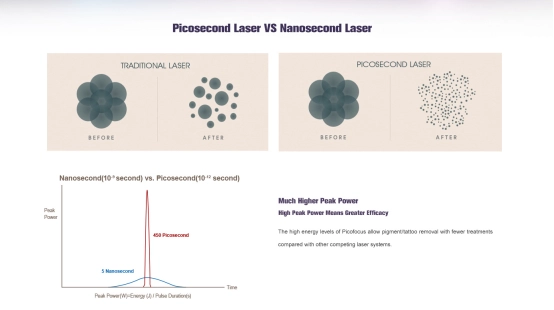
Conventional ablative lasers strip away upper skin layers by vaporizing them. This prompts fresh regeneration. Non-ablative varieties heat inner regions without affecting the outer layer. Picosecond lasers distinguish themselves. They depend on photomechanical actions rather than thermal ones. Pico laser technology utilizes light bursts, differing from traditional heat-reliant approaches. This variation allows picosecond equipment to provide robust outcomes. They sidestep extended healing times or pigment changes from swelling.
Do lasers offer faster recovery for skin treatments? Indeed, particularly picosecond versions. In contrast to ablative methods that demand weeks for surface healing, picosecond lasers access beneath the skin to gently remodel collagen. Their extremely brief pulses guarantee precise impacts. They produce minimal discomfort or flushing afterward.
Advantages of Picosecond Lasers for Collagen Boosting
A primary plus of picosecond laser therapy is its brief downtime for pico laser relative to standard choices. Clients frequently resume everyday activities promptly. This occurs since outer damage remains minimal. Moreover, the accurate energy application fits all skin colors and varieties.
Medical evidence supports these advantages for concerns such as faint lines, folds, shade issues, and blemishes. Picosecond laser treatments for fine lines, wrinkles, pigmentation, scarring, and tattoo removal. From Nubway, these devices provide dependable solutions, including fantastic services for beauty treatments. The adaptability of this technology renders it ideal for complete skin renewal programs. It delivers instant tightening and lasting structural enhancements.
What Are the Benefits of Using Picosecond Lasers for Skin Rejuvenation?
Immediate and Long-Term Effects on Skin Health
Directly following a treatment, individuals often observe modest shifts like a smoother texture or tauter appearance. This stems from initial collagen contraction. During the ensuing weeks, fresh collagen develops and organizes in the dermal layer. It yields sustained improvements in resilience and flexibility.
The Picosecond laser supports fine lines and wrinkles in the same manner as it does for scars. It activates the body’s inherent healing mechanism to ignite collagen production. This assists in repairing and reworking the skin. What happens in a picosecond? Energy surges occur so rapidly that they produce physical effects for recovery. This dual-phase process—immediate tightening followed by gradual reconstruction—establishes picosecond technology as a leading non-invasive method to revitalize skin today.
Applications of Picosecond Laser Treatments in Dermatology
Picosecond lasers enjoy broad application in dermatology offices owing to their versatile therapeutic roles. They address acne scars through dermal restructuring. Simultaneously, they fade dark areas from sunlight or hormonal shifts. Picosecond laser treatment works well for removal of skin pigmentation as the laser targets pigments in the skin. Over time, those spots diminish. The laser divides pigment fragments into minute pieces that the body eliminates naturally.
This mechanism additionally enhances facial glow by balancing tone via improved collagen renewal. What’s after picosecond? Additional treatments extend early progress for ongoing vitality. For people dealing with age-related dullness or irregular texture, consistent sessions can restore vigor and uniformity without surgical intervention. The picosecond laser machine from Nubway excels in these beauty treatments.
How Is a Picosecond Laser Treatment Administered?
Steps Involved in a Typical Treatment Session
A routine appointment commences with a discussion. A dermatologist assesses specific concerns like wrinkles or discoloration. Once appropriateness is verified, they customize parameters for elements such as penetration depth or intended effects.
During the session, rapid intense light pulses are applied to targeted zones. Specialized handpieces direct them for exact coverage. Every pulse endures only trillionths of a second. Consequently, discomfort remains slight, and effectiveness persists throughout the treated sections. What comes after a picosecond? The skin starts its natural mending process immediately. What is the downtime for pico laser? Typically, only slight redness that clears quickly.
Post-Treatment Care for Optimal Results
Following picosecond therapy, adhere strictly to the provider’s post-care advice. Employ gentle washing methods and hydrating lotions to safeguard the skin’s protective layer during the healing period. Protect against sunlight, since newly processed areas could be more sensitive briefly. Does pico laser have downtime? Very little, yet proper care aids recovery. Downtime after pico laser tends to be short.
Adhering to advised practices accelerates the healing. It further amplifies the collagen generation initiated by the treatments. Steady application of moisturizers paired with antioxidant aids guarantees superior rejuvenation effects over time. Downtime pico laser implies swift resumption of normalcy. Down time for pico laser stays concise, facilitating seamless incorporation into active schedules.
FAQ
Q: How often should I undergo picosecond laser treatments for optimal collagen boosting?
A: The frequency depends on individual needs; however, most dermatologists recommend scheduling treatments every four to six weeks until desired results are achieved before transitioning into maintenance phases thereafter.
Q: Are picosecond lasers safe for all skin types when targeting collagen production?
A: Yes—thanks to their precise targeting capabilities that minimize thermal diffusion—they’re considered safe across diverse complexions without heightened risk factors associated with older technologies.
Q: Can I expect immediate results from picosecond laser treatments?
A: Some visible improvements may appear right away due primarily to transient tightening effects; however full benefits emerge gradually as biological processes continue generating fresh structural proteins beneath surface layers over subsequent weeks following each appointment cycle.