
How 755, 808, 940 and 1064 nm Diode Laser Wavelengths Fit Different Clinic Needs
A diode laser should match the clinic’s patient mix, treatment menu and operating model. No single wavelength label answers every buying question. A four-wavelength platform can widen protocol options, but only when power delivery, pulse control, cooling, spot size and training support the intended use.
For European clinics and distributors, the practical decision concerns configuration rather than marketing numbers. Buyers should ask which wavelength blend serves common hair and skin profiles, how operators will adjust parameters, and whether the diode laser machine can maintain stable output during a busy schedule.
Why Does Diode Laser Wavelength Configuration Matter?
How Does Selective Heating Work?
Laser hair removal relies on selective heating. Melanin in the hair shaft and follicular structures absorbs optical energy, while pulse duration, fluence and cooling help manage heat around the treatment site. Wavelength affects absorption and penetration, so a protocol should balance follicular heating against epidermal exposure.
At the platform level, the ST808 specification combines 755, 808, 940 and 1064 nm options with adjustable pulse width and energy settings. Light energy reaching the follicle and converting to heat, while surrounding tissue protection depends on appropriate parameter selection.
What Changes the Protocol?
Clinics should avoid treating a wavelength as a guarantee. Skin phototype, hair colour, hair calibre, anatomical area, sun exposure and treatment history influence protocol design. Local regulations and device instructions remain the controlling references.
What Does Each Diode Laser Wavelength Contribute?
When Does a 755 nm Diode Laser Fit a Clinic?
The 755 nm band generally offers higher melanin absorption than longer near-infrared wavelengths. That characteristic can support work on finer or lighter pigmented hair where adequate contrast remains, especially on lighter skin profiles. Higher epidermal melanin absorption also demands conservative parameter selection and reliable cooling.
Why Is an 808 nm Diode Laser a General-Purpose Choice?
The 808 nm band is now a popular choice for professionals. It offers a useful mix of light absorption and skin penetration. This balance works very well during most standard hair-removal treatments. Many clinics want to offer a wide range of services. For these businesses, the 808 nm wavelength usually acts as the main treatment option. It serves as the core of their daily work, instead of just an extra tool for special cases.
The phrase diode laser hair removal machines covers many different power, cooling and spot-size designs. Buyers should compare delivered energy and operating consistency, not assume equal performance from a shared wavelength label.
What Role Does a 940 nm Diode Laser Play?
The 940 nm band sits between 808 and 1064 nm and may broaden the energy profile of a combined handpiece. Clinical value depends on the optical design, wavelength proportions and available protocols. A supplier should explain whether 940 nm operates simultaneously, selectively or as part of a fixed blend.
When Should a Clinic Consider a 1064 nm Diode Laser?
The 1064 nm band has lower melanin absorption and deeper penetration than shorter options. Those characteristics can support cautious protocol planning for darker skin profiles and coarse, deeper hair. Lower absorption does not remove risk; fluence, pulse width, cooling and operator judgement remain important.
Clinics serving diverse populations may see 1064 nm coverage as an important procurement requirement. Patch testing and conservative escalation should remain part of the operating policy.
How Should a Clinic Match the Diode Laser Configuration?
Which Wavelengths Fit the Patient Mix?
A clinic focused on lighter skin and mixed hair calibre may prioritise access to 755 and 808 nm. A clinic with a wider phototype range may place greater weight on 808 and 1064 nm coverage. A multi-site group may prefer one platform that supports consistent training across several patient profiles.
What Should a Demonstration Test?
Four wavelengths do not automatically create four separate treatment modes. Ask how the machine distributes optical output, which settings operators can control, and whether presets can be adapted within approved guidance. During a demonstration, review parameter access, handpiece balance, screen clarity and the time required to move between body areas.
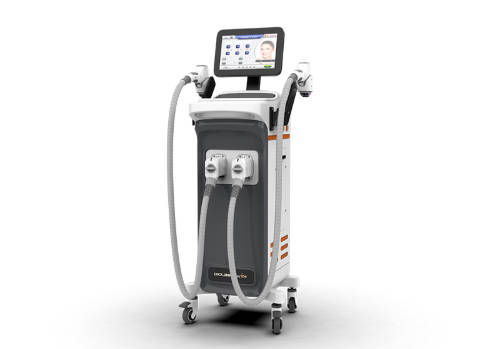
The shortlisted four-wavelength diode laser hair removal machine should also be assessed against room layout, electrical supply, expected daily utilisation and service capacity.
What Should Buyers Check Beyond Wavelength Numbers?
Can Cooling Stay Stable?
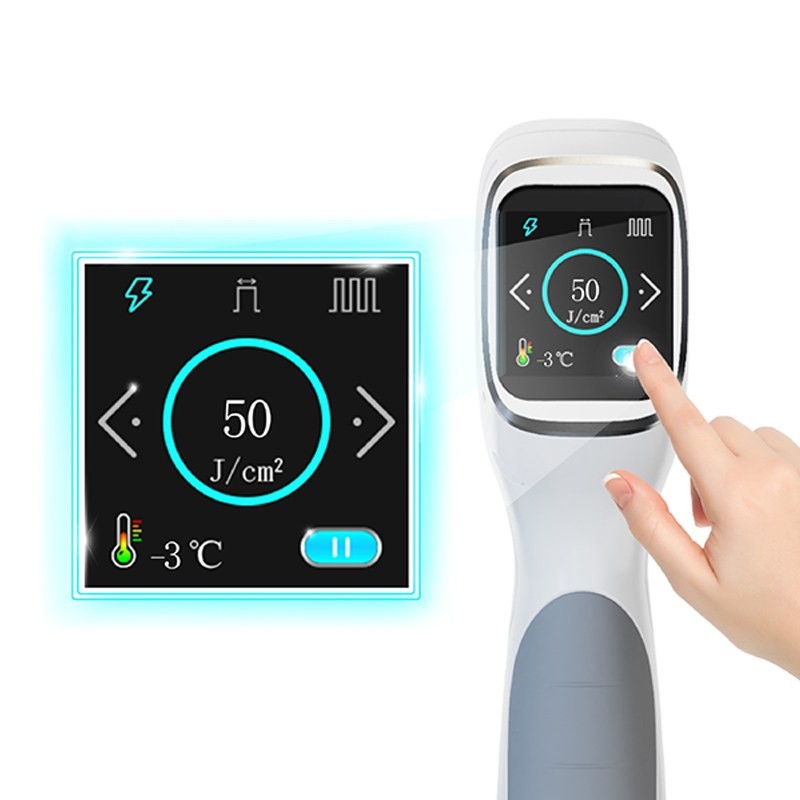
Cooling deserves equal attention. The ST808 material lists a sapphire contact surface and a handle temperature reaching as low as -30 degrees C under specified conditions. A temperature-sensing system and machine refrigeration support contact cooling. Clinics should verify measured performance during sustained operation because a minimum temperature claim alone does not describe comfort, recovery time or thermal stability.
Can Workflow Stay Efficient?
The same product material lists operation up to 20 Hz, a 1.54-inch handpiece screen and several spot choices, including 12 x 12, 12 x 20 and 12 x 24 mm. Larger areas may benefit from wider coverage, while smaller zones need control around contours. The relevant question concerns stable energy delivery at the chosen frequency and spot size, not the highest number on a brochure.
Maintenance planning should cover water quality where applicable, filter schedules, handpiece inspection, cooling checks and software records. A buyer reviewing diode laser cooling systems should also ask how faults are diagnosed and how quickly replacement components can reach the clinic.
How Can a Clinic Evaluate a Diode Laser Machine?
What Should a Live Test Show?
Start with the patient mix and define the skin profiles, hair types and treatment areas expected during the first year. Next, request a live demonstration using representative settings rather than a single showcase preset. Record cooling behaviour, handpiece comfort, interface clarity and treatment pace.
Which Support Terms Affect Ownership?
Then review training scope, protocol documentation, warranty terms, spare-part availability and response times. Certification should be checked for the exact model and destination market; portfolio-level certificates should never be assumed to cover every configuration.
Finally, model capacity using realistic appointment lengths and cleaning intervals. A fast repetition rate has commercial value only when cooling, staffing, and room turnover can support continuous use.
How Can Nubway Support a Clinic with the ST808?
Which ST808 Features Need Confirmation?
Nubway positions the ST808 as a configurable professional platform with four wavelength options, multiple spot sizes, sapphire contact cooling and operation up to 20 Hz. We also records engineering, training and after-sales resources for international customers. Buyers should confirm the exact ordered specification, including handpieces and destination-market documentation in the quotation.
How Should Buyers Request a Configuration?
For a clinic or distributor, the next useful step is a requirements-based discussion rather than a generic price request. Share your expected patient mix, preferred spot sizes, daily workload, voltage requirements and service location, and we can propose a configuration for your technical review.
FAQ
Q: Which Diode Laser Wavelength Fits Darker Skin?
A: The 1064 nm band generally provides lower epidermal melanin absorption than 755 or 808 nm. Safe use still depends on conservative settings, cooling, patch testing and trained clinical judgement.
Q: Does a Diode Laser Need Contact Cooling?
A: Contact cooling can improve epidermal heat management and patient comfort. Buyers should assess cooling stability during sustained operation rather than relying only on a stated minimum temperature.
Q: What Should a Clinic Ask Before Buying a Diode Laser?
A: Ask for the exact wavelength configuration, output and pulse ranges, spot sizes, cooling design, training, warranty, service process and model-specific documentation for the destination market.