
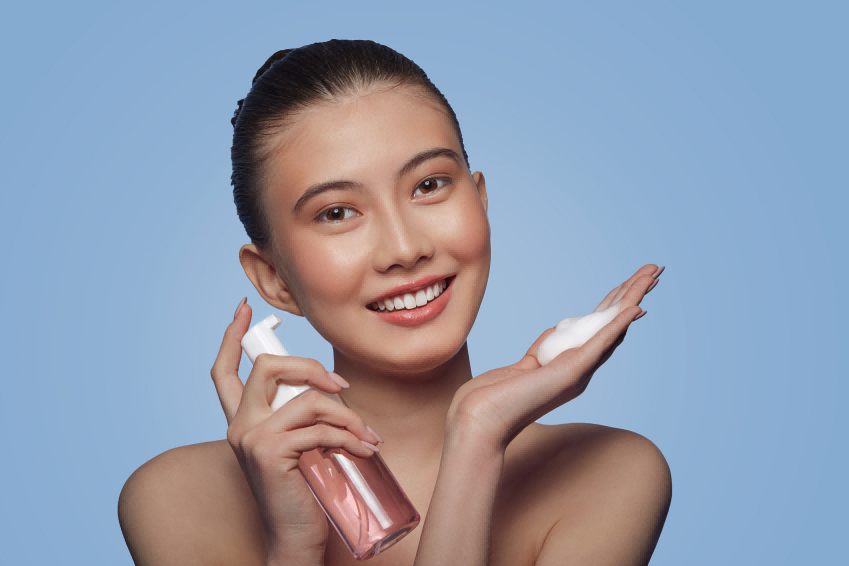
Cleansing, as the first step in a skincare routine, may seem the simplest, but it is also the most easily misunderstood part. Many people are willing to spend a lot of money on essence and face cream, but they are willing to make do with the product they use every morning and evening. Little do they know, an unsuitable facial cleanser may not only greatly reduce the effectiveness of subsequent skincare products worth thousands, but also quietly destroy the natural barrier of the skin over time.
In today’s facial cleansing market, the debate between soap and amino acids has never stopped. Some people regard soap as a fierce beast and do not use non amino acids. Some people also dislike amino acid cleansers for not being able to clean thoroughly, and always love the refreshing feeling brought by soap base. So, where exactly is the truth? How can we choose the right cleansing solution based on our skin type?
1. Get To Know Your Facial Cleanser: The Essential Difference Between Soap And Amino Acids
1.1 Soap Cleansing: A Long History of Powerful Cleaners
It is a product generated by saponification reaction between fatty acids (such as stearic acid, nutmeg acid, lauric acid) and strong bases (such as potassium hydroxide, sodium hydroxide). When you see the presence of both fatty acids and alkaline agents in the ingredient list of a facial cleansing product, and rank relatively high, it can be basically determined that this is a soap based facial cleanser.
The characteristics of soap facial cleansing are very distinct: rich foaming, strong cleaning power, and a clear dry feeling after washing. This refreshing feeling has been regarded as the standard for washing clean for a long time in the past. However, behind this strong cleansing power is its high pH value (usually between 9-10, alkaline), while the pH value of healthy human skin is about 5.5-6.5, weakly acidic. Long term use of soap based facial cleansing can excessively strip the sebum film on the surface of the skin, damage the acidic protective film, and cause a decrease in the moisture content of the stratum corneum, leading to dryness, tightness, and even sensitivity.
1.2 Amino Acid Cleansing, Gentler to Skin
Amino acid facial cleansing does not refer to the presence of amino acids as a nutritional component in facial cleansing, but rather to the core cleansing ingredient being surfactants composed of salts of amino acids. Common ingredient names often have suffixes such as monosodium glutamate, potassium glycinate, etc.
The characteristics of amino acid surfactants are completely opposite to soap based ones: they are weakly acidic (pH close to the skin), have extremely low skin irritation, have good biodegradability, and leave the skin feeling soft and not tight after washing. But its disadvantages also exist: its foaming ability is relatively weak, its cleansing power may be slightly insufficient for some oily skin types, and the raw material cost is high, so the price of amino acid cleansing is usually higher than that of ordinary soap based cleansing.
2. Skin Type Matching: There Is No Best, Only The Most Suitable
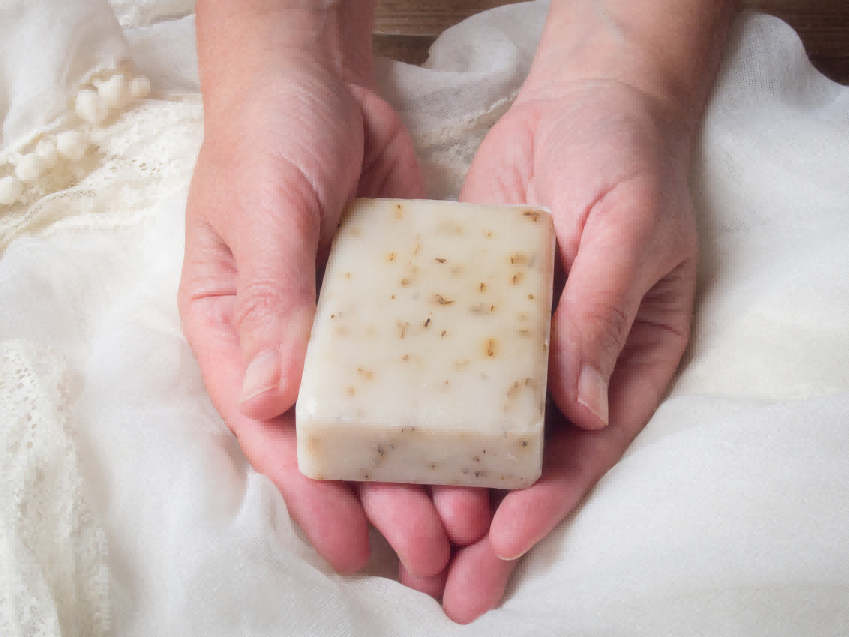
2.1 Dry, Sensitive, And Mature Skin: Please Firmly Embrace Amino Acids
For dry skin, sensitive skin, and mature skin, the sebum membrane is a fragile lifeline. This type of skin has low oil secretion, thin stratum corneum, and poor water retention ability. If soap cleansing is used again at this time, it is like adding insult to injury.
Dry/neutral skin: Pure amino acid cleansing should be the preferred choice for daily cleansing. Especially in the morning, you can even clean the T-zone with just water or a very mild cleanser, and rinse the entire face with water. If you haven’t applied makeup or used waterproof sunscreen at night, amino acid cleansing is enough to wash away the accumulated dust and excess oil of the day.
Sensitive skin: not only choose amino acid cleanser, but also try to choose products with simple formula and without essence, alcohol, pigment and too many preservatives. For skin that is in a sensitive and explosive period (such as redness, swelling, and stinging), it is even possible to temporarily suspend the use of cleansing products and only wash with warm water to give the skin time to self repair.
2.2 Oily, Mixed, And Acne Prone Skin
Oily skin is a loyal fan of soap cleansers, as the instant dryness after washing is truly captivating. However, long-term use of soap based facial cleansers can easily lead to an awkward situation of external oil and internal dryness: excessive deprivation of oil on the surface of the skin, and sebaceous glands receiving the wrong signal of oil deficiency, instead working overtime to secrete more oil, forming a vicious cycle.
For this type of skin, a more scientific strategy is to divide it into time zones and use it in combination.
Morning cleansing: After a night of rest, the oil secreted by the skin is actually a natural protective film. Oily skin can choose a mild amino acid cleanser in the morning, focusing on cleaning the T-zone (forehead, nose) and gently brushing over the cheeks to avoid excessive cleansing.
Evening cleansing: After a day of external environmental disturbance, the skin is covered with dust, sunscreen, makeup, and oxidized oils. At this point, products with stronger cleaning power can be used appropriately. But there is no need to stick to soap. There are many compound cleansers on the market, which mainly use amino acid surfactants and combine a small amount of soap base or amphoteric surfactants to enhance cleaning power. This product ensures sufficient cleaning power while reducing the irritation caused by a single soap.
2.3 Mixed Skin: Learn the Wisdom of Partition Care
Mixed skin (T-zone oil, dry cheeks) is the most common skin type among Asians. The principle when choosing to clean this type of skin is to accommodate dry areas.
Because you cannot make a facial cleanser completely wash away the oil in the T-zone without affecting the moisture in both cheeks. Therefore, gentle cleansing should be the main approach (amino acids or APG glucosides). In terms of technique, you can rub in the T-zone for a few more seconds and quickly pass through the cheeks. If you feel that the cleanliness of the T-zone is not sufficient, you can regularly use salicylic acid products for local keratin conditioning instead of trying to solve all problems with a strong alkaline soap cleanser.
3. Advanced Guide: How to Identify Fake Amino Acids and Use Cleansing Correctly
3.1 Beware of Pseudo Amino Acid Cleansing
With the popularization of the concept of amino acids, many businesses have started playing word games. Some products, although labeled with amino acids in large letters on the packaging, have a lower ranking of amino acid activity in the ingredient list, and the real main cleaning agents are still soap based or SLS/SLES
Identification method: Don’t just look at the slogan, look at the ingredient list. If a combination of fatty acids and bases appears at the front of the ingredient list, even if trace amounts of amino acid surfactants are added, it is still essentially soap based cleansing.
3.2 Correct Cleansing Techniques And Water Temperature
Choosing the right product and using it improperly is equally futile.
Water temperature: Please use warm water. Overheated water can excessively dissolve sebum and exacerbate dryness; Cold water cannot effectively emulsify facial cleansing products, and it is also difficult to flush away oil and dirt. The water temperature should be close to body temperature (about 32-34 ℃), and it is recommended that the back of the hand does not feel cold or hot.
Bubbling: Whether soap or amino acids, it is recommended to lather thoroughly on your hands or with a foaming net before applying to your face. High concentration facial cleansers that come into direct contact with the skin can easily cause excessive cleansing or residual irritation. The dense foam is the buffer layer between the cleanser and the skin, which can effectively clean and reduce friction.
Technique: gently massage in circles with foam, the time should not be too long, and it should be controlled within 30 seconds to 1 minute. Focus on cleaning areas such as the forehead, nose, chin, etc. that have more oil or are easily overlooked, and gently pass over areas with thinner barriers such as the cheeks.
Rinse: Rinse thoroughly with flowing warm water, pay special attention to the hair line, mandibular line, ear and other areas where foam is easy to remain. Residual facial cleansing products are one of the common culprits causing acne at the hairline.
Drying: After washing, do not let it air dry naturally, and do not rub it back and forth with a towel. Use disposable face towels or clean towels to absorb moisture by pressing, and apply subsequent skincare products within 3 minutes, seizing the golden time when the skin’s stratum corneum has the highest moisture content.