
1.What is the Clinical Endpoint Response?
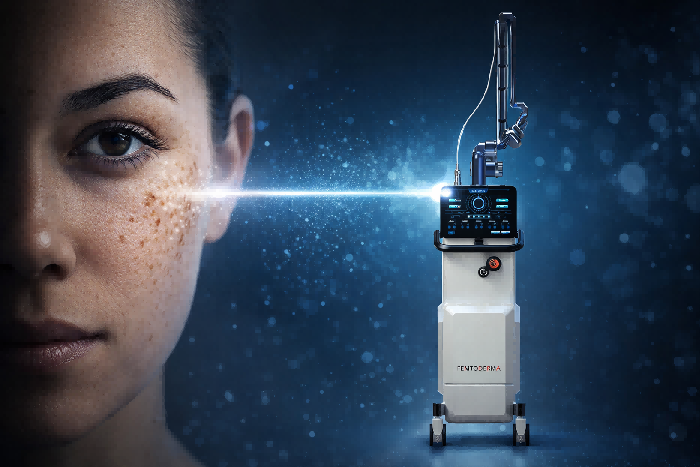
Clinical endpoint response is a direct visual indicator for doctors to determine whether the treatment has reached a predetermined effective energy level during laser therapy by observing immediate and specific changes in the skin. It is essentially a biological response signal of skin tissue to precise laser energy – for example, when treating freckles, pigment particles are instantly heated and exploded, and the skin surface presents a precise gray-white protrusion (immediate white protrusion reaction), indicating that the laser has successfully shattered the target.
When treating vascular or tender skin, it may be due to uniform redness or slight swelling of the skin. Doctors must accurately identify and stop at this reaction point, as it is the boundary between confirming efficacy (sufficient energy to destroy lesions) and safety (avoiding excessive energy damage to normal tissues), and is the core basis for balancing treatment effectiveness and risk.
2.What is the Mechanism of Whitening?
Laser has strong wave particle duality. When the energy density exceeds a certain threshold when the skin receives energy, the pressure wave (shock wave) generated by it causes severe stretching and molecular bond breaking (explosion) of melanin. The epidermal layer and subcutaneous tissue instantly separate, and a large number of small spaces (i.e. bubbles) appear at the junction of epidermis and true epidermis. Light cannot penetrate the bubbles and reflects white light.
The stronger the shock wave, the greater the destructive power, the larger the bubbles formed, the stronger the scattering of light, and the whiter it appears to the naked eye. If applied with physiological saline, it can be found that the skin can regain a basically normal complexion. So this is the ultimate response we need to pursue in treating pigmentation problems: to inactivate and disintegrate the epidermis, the pigmentation is also destroyed, and is subsequently engulfed and metabolized by neutrophils and macrophages in inflammatory reactions, achieving the effect of eliminating pigmentation.
3.How to Achieve the Optimal Clinical Endpoint Response?
3.1 Preoperative Evaluation: Accurate Diagnosis is A Prerequisite for Successful Treatment
Before treatment, a comprehensive and detailed preoperative evaluation is required, which includes professional consultation, skin microscopy, and other methods to fully understand the patient’s basic skin condition.
Including skin color type (determined according to Fitzpatrick skin color classification criteria), skin barrier function, and the presence of inflammation or sensitivity issues; At the same time, clarify the core characteristics of the disease, such as the type (pigmented, vascular, etc.), size, quantity, distribution range, color depth, as well as key information such as the duration of the disease and past treatment history, to avoid treatment direction errors caused by diagnostic bias. In addition, it is necessary to evaluate the patient’s treatment expectations and contraindications (such as pregnancy, coagulation dysfunction, active infections, etc.) to ensure the safety and suitability of the treatment.
3.2 Equipment Debugging and Spot testing: Building A Solid Foundation for Safe Treatment
 Before treatment, it is necessary to conduct a comprehensive inspection and debugging of the equipment to confirm that it is in good operating condition, with stable energy output, regular spot shape, and no abnormalities in core components such as lasers and cooling systems. On this basis, combined with the patient’s skin condition and disease characteristics, suitable treatment parameters were preliminarily screened, including energy density, spot size, pulse width, output frequency, etc.
To further verify the safety and effectiveness of the parameters, spot testing must be conducted: priority should be given to selecting small areas of skin at the edge or hidden parts of the patient’s skin lesions (such as behind the ear or near the jawline) as the testing area, and single or small pulse irradiation should be performed with energy lower than the expected treatment value.
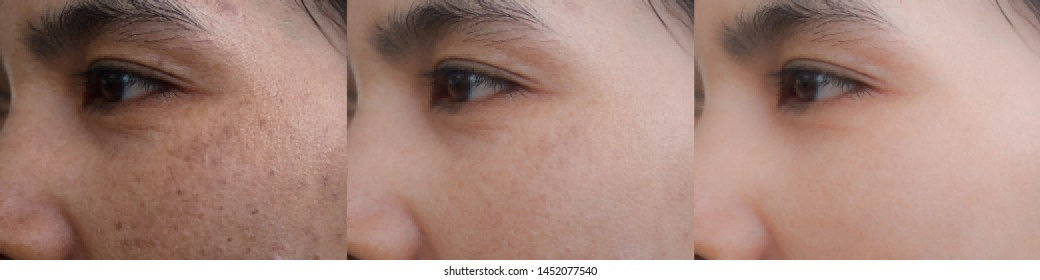
After the test, it is necessary to closely observe the immediate reaction of the skin (such as slight redness, slight scabbing, slight bursting of pigment particles, etc.), and observe whether there are adverse reactions such as redness, swelling, blisters, pigmentation or reduction. Accurately determine the appropriate treatment endpoint based on test results, ensuring that the treatment achieves both effectiveness and avoids excessive damage.
3.3 Adaptation for Special Populations: Principles for Adjusting Parameters for Dark Skin Tones
For Fitzpatrick IV-VI type patients with dark skin color, due to the high content of melanin in the skin, their ability to absorb laser light is stronger, and they are prone to adverse reactions such as pigmentation, blisters, and even scars. Therefore, the core principles of “low energy, low frequency, and avoiding excessive overlap” need to be followed.
Specifically, the treatment energy needs to be reduced by 10% -30% compared to patients with light skin color, reducing the instantaneous absorption of laser energy by melanin; The output frequency of the light spot needs to be reduced to avoid heat accumulation caused by multiple exposures to the same area in a short period of time.
During operation, the overlap rate of the light spot should be controlled within 5% -10%, with a maximum of 15%, to prevent excessive damage caused by energy accumulation in the overlapping area. At the same time, small-scale, low-energy exploratory treatment can be carried out before treatment, and after observing no abnormalities, the treatment scope can be gradually expanded to ensure safety.
3.4 Energy Exception Handling: Response Plans for Excessive and Insufficient Energy
3.4.1 Emergency response for excessive energy
If there are signs of excessive energy such as epidermal damage, tissue splashing, immediate redness and swelling of the skin, and blister formation during treatment, the treatment should be stopped immediately, and the following emergency measures should be taken: first, extend the cold compress time to 20-30 minutes, use 4-8 ℃ cold compress patches or ice packs for gentle cold compress, relieve redness and swelling, pain, and reduce continuous heat damage.
Secondly, timely apply medical repair gel (such as ceramide, growth factor and other ingredients) to protect the damaged skin barrier and promote wound healing. If the damage is severe, sterile bandaging is required to avoid infection. After surgery, strict sun protection is necessary to avoid pigmentation caused by UV stimulation.
At the same time, patients should be informed to avoid scratching and getting wet, and to apply repair products according to medical advice. If necessary, oral anti-inflammatory drugs should be taken to prevent infection. Subsequent treatment requires a significant reduction in energy and adjustment of relevant parameters, followed by retesting of the light spot before proceeding.
3.4.2 Adjustment strategy for low energy
If there is no obvious immediate reaction to the skin after treatment (such as no redness, no signs of pigment particle explosion), or if there is no significant improvement in the skin lesions observed 1-2 weeks after surgery, it indicates that the treatment energy is too low. At this point, the pigment particles cannot be effectively blasted, resulting in poor treatment outcomes and potentially requiring multiple treatments for patients, increasing treatment cycles and costs. On the premise of eliminating equipment faults, the energy density should be appropriately increased (by 10% -20% each time), and the spot size or pulse width can be adjusted according to the situation to enhance the effect of laser on pigments.
After adjustment, it is necessary to conduct a small-scale spot test again to observe whether the skin has the expected slight reaction. After confirming that there are no abnormalities, treatment can be carried out according to the new parameters. If there is still no ideal response after multiple attempts to increase the energy, it is necessary to re evaluate the parameter combination based on the device performance and the patient’s skin condition (such as changing the spot size, adjusting the pulse mode, etc.), and if necessary, change the appropriate laser wavelength to ensure the effectiveness of the treatment.
3.5 Difficult to Determine Treatment Endpoint: Decision Principle of Prioritizing Safety
When the treatment endpoint is difficult to accurately determine due to the complex skin condition of the patient (such as uneven color of skin lesions, weak skin barrier function) or the special characteristics of the disease (such as blurred skin lesion boundaries, multiple skin problems), the principle of “safety first, more conservative than reckless” should be followed, and safer and more reliable treatment parameters should be prioritized.
For example, energy can be appropriately reduced and the treatment scope can be shortened, with the phased goal of “mild effectiveness without obvious damage”. After subsequent follow-up visits to observe skin recovery, parameters can be gradually adjusted and the treatment scope can be expanded. To avoid blindly increasing energy or prolonging treatment time in pursuit of a single treatment effect, which may cause irreversible skin damage, and ensure the safety and sustainability of treatment.