
Every time we face red and swollen pimples in the mirror, we not only worry about their “appearance impact”, but also fear the permanent imprint they may leave in the future – acne scars. Why do some pimples leave their skin as smooth as before, while others leave behind uneven scars? The mystery behind this is far more than just “squeezing or not squeezing”, it is a complex battle that occurs in the microscopic world of the skin, and its outcome is determined by multiple factors such as the depth of inflammation, personal constitution, and care behavior.
1.The Structure of the Skin and the Essence of Acne
To understand the formation of acne scars, it is first necessary to understand the precise structure of our skin and the fundamental causes of acne.
Our skin is not a simple membrane, but a complex organ. From top to bottom, it can be divided into:
1.1 Epidermal Layer
The outermost layer, like the “exterior wall coating” of a building, is mainly composed of keratinocytes that constantly metabolize and have excellent regenerative ability. Shallow injuries can usually be repaired here as before.
1.2 Dermis Layer
Located beneath the epidermis, it is the “core structural layer” of the skin. This place is filled with collagen, elastic fibers, hair follicles, sebaceous glands, blood vessels, nerves, and other substances that give the skin elasticity and strength. The damage to the dermis layer is the key to the formation of permanent scars.
1.3 Subcutaneous Tissue
Mainly composed of fat, it plays a buffering and insulation role.
Acne is essentially a chronic inflammatory disease of hair follicle sebaceous gland units. The core processes include excessive oil secretion, abnormal keratinization and blockage of hair follicle horn cells to form micro acne, proliferation of Propionibacterium acnes and other microorganisms, ultimately triggering immune inflammatory reactions. The degree and location of inflammation directly determine the “ruins” situation after the war.
2.Causes of Acne Scars: Collapse and Repair Failure of the Dermis Layer
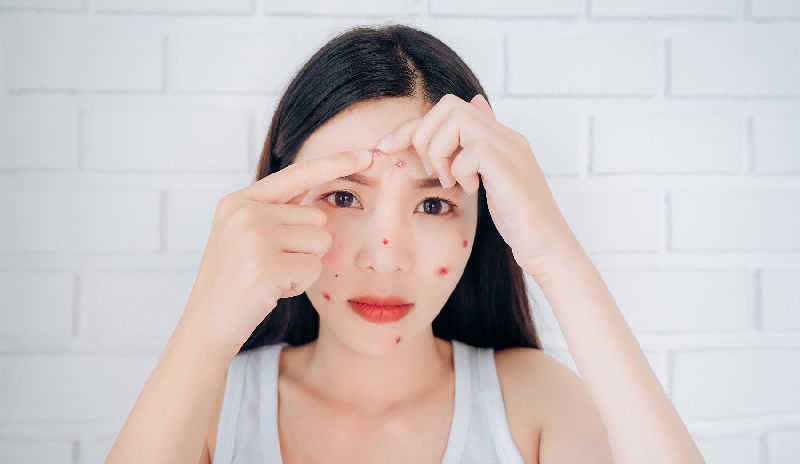
Acne scars, medically known as “atrophic scars,” are essentially permanent defects and structural destruction of collagen and elastin fibers in the dermis. It is not a stain on the surface of the skin, but a collapse of deep structures. The following situations are the key factors leading to collapse.
2.1 Depth and Intensity of Inflammation: Damaging the Foundation
This is the most crucial determining factor.
Superficial inflammation: When the inflammatory response is limited to the superficial layer of the epidermis or dermis, the repair mechanism of the skin can effectively remove damage, utilize surrounding normal tissues for regeneration and reconstruction, and leave no trace after healing.
Deep and severe inflammation: When the infection is severe and the inflammation is intense, a large number of immune cells (such as neutrophils) gather and release various inflammatory mediators and enzymes (such as matrix metalloproteinases). These substances are like “false explosions”, indiscriminately dissolving and destroying the healthy and orderly collagen and elastic fiber network of the dermis while killing bacteria. Once this supporting structure is extensively damaged, the skin will lose its support and form downward depressions – known as acne pits.
2.2 Cysts and Nodules: Deep Bombs
Compared to ordinary acne (blackheads, whiteheads) and even inflammatory papules and pustules, cystic and nodular acne have a higher risk of leaving acne scars. These two types of acne have inflammation centers that extend deep into the dermis or even subcutaneous tissue, making it a deep battle from the beginning. The enormous inflammatory pressure and extensive tissue damage make the repair mechanism of the dermis layer overwhelmed, which can easily lead to repair failure and leave deep pits.
2.3 Improper External Intervention: Self Destructive Rescue
The most widely known but also the most heartbreaking cause. Squeezing or puncturing acne with hands, tools, or unprofessional methods, especially immature inflammatory acne, can have catastrophic consequences:
Expanding infection: External forces push bacteria and inflammatory substances towards deeper and more surrounding areas of the skin, artificially expanding the scope of inflammation and depth of damage.
Physical tearing: Nails or tools may directly tear the hair follicle wall and even the dermis layer, causing mechanical damage more severe than inflammation itself.
Double destruction: The squeezing behavior itself, combined with the aggravated inflammation, almost inevitably leads to damage to the dermis layer under double impact.
2.4 Individual Genetics and Constitution: Differences in Congenital Repair Ability
Scar constitution tendency: Some people’s fibroblasts (cells responsible for producing collagen) are functionally imbalanced during the repair process, making them more prone to excessive scar tissue (hypertrophic scars) or conversely, collagen deficiency (atrophic scars, i.e. acne scars).
Skin repair ability: Genes also determine the strength of each person’s skin self repair and collagen remodeling ability after inflammation.
Immune response intensity: Some people may experience more severe immune inflammatory reactions when facing the same degree of bacterial infection, resulting in more severe tissue damage.
2.5 Delay and Improper Treatment: Missing the Golden Opportunity
Long term ‘letting go’ of moderate to severe acne or only using inappropriate skincare products cannot control the continuous progression of deep inflammation, which is equivalent to letting the war spread and constantly destroying the structure of the dermis. Early, standardized, and effective medical interventions are crucial.
3.Why Can Some Pimples Be Safe and Sound?
Acne that leaves no trace after healing usually meets the following “lucky” conditions:
Superficial inflammation: The lesion has not affected the collagen network of the dermis, mainly limited to the epidermis and hair follicle opening.
Mild type: mostly non inflammatory acne or mild inflammatory papules, with a small range and mild degree of inflammation.
No external damage: No compression or trauma, inflammation naturally subsides, and the skin can be repaired smoothly.
Timely and effective intervention: The development of inflammation was controlled in the early stages through the use of appropriate medications such as topical retinoids, benzoyl peroxide, antibiotics, etc.
Strong self-healing ability: The individual’s fibroblasts function well and can accurately and efficiently complete injury repair and collagen regeneration.
4.Core Strategy: From Passive Worries to Active Defense
Understanding the causes of acne scars, the prevention strategy becomes clear, with the core being “controlling inflammation, prohibiting squeezing, and treating early”.
4.1 Strictly Control Inflammation
This is the cornerstone of preventing acne scars. Once recurrent or severe acne occurs, especially deep and painful nodules and cysts, seek the help of a dermatologist as soon as possible. Doctors may prescribe oral or topical antibiotics, isotretinoin, hormone drugs, etc. to strongly inhibit deep inflammation from the root and protect the dermis layer.
4.2 Absolutely Prohibit Self Squeezing
This is the simplest and most effective form of self-protection. Especially resist the temptation to crush those located in the “danger triangle” (from the nasal root to the line between the two corners of the mouth) and deep in non purulent pimples.
4.3 Adhere to Scientific Skincare
Use gentle cleaning products to avoid excessive friction. Some skincare products containing salicylic acid, fruit acid (promoting keratin metabolism), niacinamide (anti-inflammatory, repairing barriers), retinol and its derivatives (stimulating collagen regeneration, improving photoaging) can be used as supplements. Strict sun protection is crucial, as ultraviolet radiation can exacerbate post inflammatory pigmentation and damage collagen.
4.4 Early Medical Intervention
For superficial inflammatory erythema or early scars that have already formed, photon rejuvenation (IPL), pulsed dye laser, etc. can block blood vessels and reduce erythema; Non ablative dot matrix lasers can stimulate collagen remodeling early and prevent indentation fixation.
4.5 Healthy Lifestyle
A balanced diet (paying attention to the possible effects of high sugar and dairy intake), regular sleep patterns, and stress management can help maintain endocrine stability and normal immune function, reducing acne outbreaks.
5.If Acne Scars Have Already Formed: the Repair Surgery of Modern Medicine
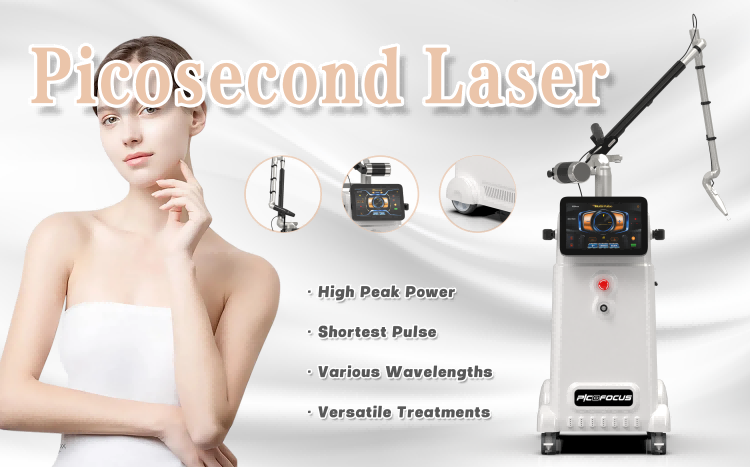
For already formed acne scars, skincare products have little effect. But modern dermatology provides multiple effective “reconstruction solutions”, which are mostly based on the principle of “stimulating collagen regeneration and remodeling in the dermis layer”.
Dot matrix laser (peelable such as CO2 laser, non peelable): By arranging small laser beams in a matrix, tiny thermal damage areas are created on the skin, initiating the body’s wound healing response, synthesizing a large amount of new, orderly arranged collagen protein, gradually flattening depressions. This is one of the “gold standards” for treating acne scars.
Microneedle/radiofrequency microneedle: By physically or in combination with radiofrequency energy, tiny channels are created to stimulate collagen regeneration.
Chemical exfoliation (such as high concentration fruit acid, TCA): Controllable damage to the skin, promoting regeneration.
Filling therapy: using fillers such as hyaluronic acid directly injected into the depression to provide immediate support, but not permanent.
Subcutaneous dissection: Use a needle to loosen the fiber adhesion under the acne pit, allowing the tissue at the bottom of the depression to be released.
The treatment plan needs to be comprehensively evaluated and personalized by professional doctors based on the type of acne pit (ice cone type, roller type, van type), depth, and skin condition. It usually requires multiple treatments to achieve the desired effect.