
Pico Laser vs Q-Switched Nd:YAG Laser: Which One Should Clinics Choose?
Choosing between picosecond and Q-switched Nd:YAG technology is not a matter of declaring one platform universally superior. A clinic needs to connect pulse duration, wavelength options, treatment indications, patient characteristics and operating support to a defined service plan. Searches for pico laser vs q switch often imply a simple contest, yet the commercially useful question is whether a device can deliver the required parameters consistently, support appropriate patient selection and fit the clinic’s staffing and follow-up model.
How Do Picosecond and Q-Switched Nd:YAG Systems Differ?
Why Does Pulse Duration Matter More Than the Marketing Label?
Both technologies deliver short pulses, but on different time scales. Picosecond pulses are shorter than the nanosecond pulses commonly associated with Q-switched systems. A shorter pulse can change how quickly energy reaches a target and how mechanical and thermal effects are balanced. That distinction matters, but it does not prove that every indication, pigment colour or patient will respond better to the shorter pulse.
The practical Nd:YAG laser vs pico laser comparison therefore starts with the complete specification. Buyers should examine wavelength, pulse duration, spot delivery, fluence range, repetition rate, handpiece options and the manufacturer’s intended uses. A label alone cannot show whether operators can reproduce settings, manage treatment endpoints or document responses consistently.

Which Wavelengths Should Clinics Evaluate for Pigmentation?
The phrase pico laser wavelength for pigmentation should lead to a clinical assessment rather than a single-number answer. Different wavelengths interact differently with target chromophores and tissue depth. Pigment type, lesion diagnosis, skin characteristics and the risk of an unwanted response all influence selection. Clinics should confirm which wavelengths a particular model provides and which applications are supported by the model documentation available for the destination market.
This distinction also prevents a common purchasing error: treating pulse duration and wavelength as interchangeable. Picoseconds describe time; nanometres describe wavelength. Both influence a treatment plan, but each answers a different technical question.
When Does Picosecond or Q-Switched Treatment Fit the Plan?
Pigmentation and Tattoo Removal Require Different Assessments
Pigmentation and tattoo removal may use related laser principles, but the consultation is not identical. Pigmented lesions first require appropriate identification and an assessment of depth, pattern and skin response. Tattoo planning adds variables such as ink colour, layering, age, density and previous treatment. Clinics also need clear referral and exclusion pathways when a concern is unsuitable for an aesthetic laser service.
This is why an equipment choice should follow the intended case mix. A clinic concentrating on selected pigmentation concerns may prioritise different wavelength and spot options from a service handling multicoloured or previously treated tattoos. Claims should remain tied to the exact model, operator training and applicable instructions rather than borrowed from the technology category as a whole.
What Determines Recovery?
Questions about pico laser recovery cannot be answered responsibly with one downtime promise. The treated concern, wavelength, energy settings, number of passes, clinical endpoint, treatment area and individual response can all affect what a patient experiences. A conservative pigmentation protocol may create a different recovery pattern from an intensive tattoo-removal session.
Clinics should give patients written expectations for the planned procedure, explain which reactions require review and schedule follow-up according to the treatment protocol. Consistent photography and notes also help teams distinguish normal short-term changes from responses that need escalation.
Which Specifications Should Clinics Compare Before Buying?
Does Frequency Mean Repetition Rate, Pulse Duration or Wavelength?
The search term pico laser frequency is ambiguous. In a quotation, frequency may refer to repetition rate measured in hertz, while picoseconds describe pulse duration and nanometres describe wavelength. Buyers should insist that every number carries a unit, operating range and explanation of how the control behaves. This makes demonstrations comparable and reduces the chance that three different concepts are compressed into one marketing phrase.
What Should Displacement Mean in a Supplier Specification?
Similarly, pico laser displacement is not a standard standalone metric for comparing aesthetic platforms. A supplier using that expression should define whether it relates to handpiece movement, scanner pattern, spot positioning or another mechanism. The definition should appear in written technical material and be demonstrated in operation. An undefined term should never become the basis for a clinical claim or purchasing decision.
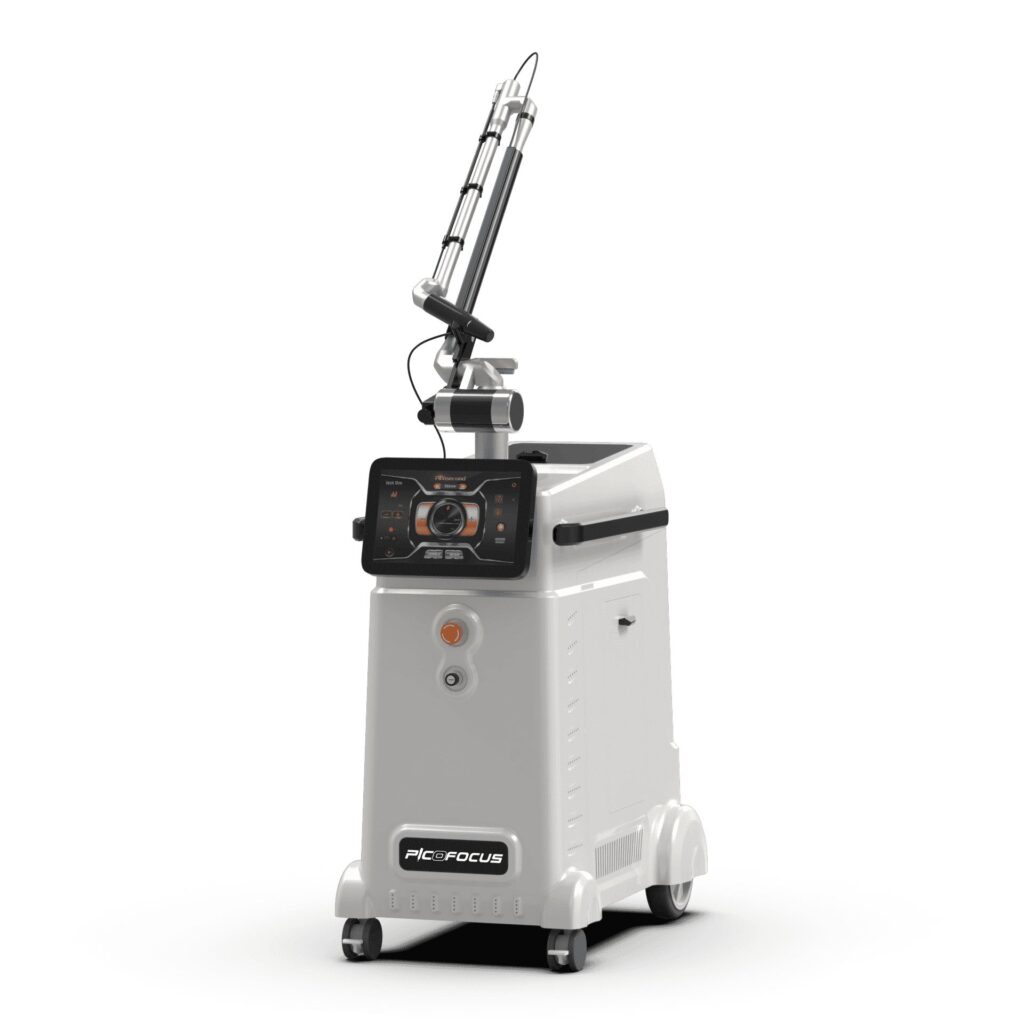
A clinic evaluating a pico laser machine should also examine usability beyond headline output. Interface logic, parameter visibility, handpiece handling, routine cleaning, consumables, fault reporting, service access and staff training all influence repeatable operation. The most impressive specification has limited value if a team cannot use or maintain the system reliably.
How Can Nubway Support a Picosecond Equipment Decision?
Compare the Two Platforms in a Demonstration
At Nubway, we offer separate picosecond and Nd:YAG product categories, allowing a buyer to compare the proposed configurations against the clinic’s intended case mix. A useful demonstration should identify the model’s available wavelengths, pulse parameters, spot delivery, handpieces, cooling arrangements and operating controls. The discussion should also separate confirmed specifications from optional configurations and from claims that require additional clinical evidence.
The demonstration is the right point to test treatment-setting visibility, emergency controls, handpiece ergonomics and record-keeping procedures. Nubway should also provide the applicable instructions and available market documentation for the exact model under consideration. Portfolio-level statements should not be treated as proof that every document applies to every destination or device.
Confirm Training, Maintenance and Market Documentation
Equipment deployment continues after installation. Nubway provides remote one-to-one training, technical communication, maintenance advice and after-sales support. Clinics should agree who will receive training, how competency will be documented, which routine checks belong to the operator and how faults are escalated. Buyers should also clarify spare parts, consumables, response routes and any Requisitos de OEM ou ODM before ordering.
This process turns the technology comparison into a practical procurement decision. The supplier can then respond to a defined brief covering treatments, patient profile, staff experience, room constraints and support expectations rather than recommending a platform from a headline alone.
Perguntas frequentes
P: Is Picosecond Technology Better Than Q-Switched Nd:YAG for Every Clinic?
A: No. Shorter pulses may be relevant to some targets, but suitability depends on wavelength, indication, patient assessment, operator competence, workflow and model documentation. A clinic should select the configuration that supports the planned service safely and consistently.
P: How Long Does Recovery Take?
A: Recovery varies with the indication, treatment area, settings, endpoint and individual response. Clinics should provide procedure-specific guidance and review instructions instead of promising one universal downtime period.
P: Which Frequency Should a Buyer Compare?
A: Buyers should compare clearly labelled values: repetition rate in hertz, pulse duration in picoseconds or nanoseconds, and wavelength in nanometres. These measurements describe different characteristics and should not be combined into one undefined claim.